Project 1 - Autobiographical Documentary
Individual Project
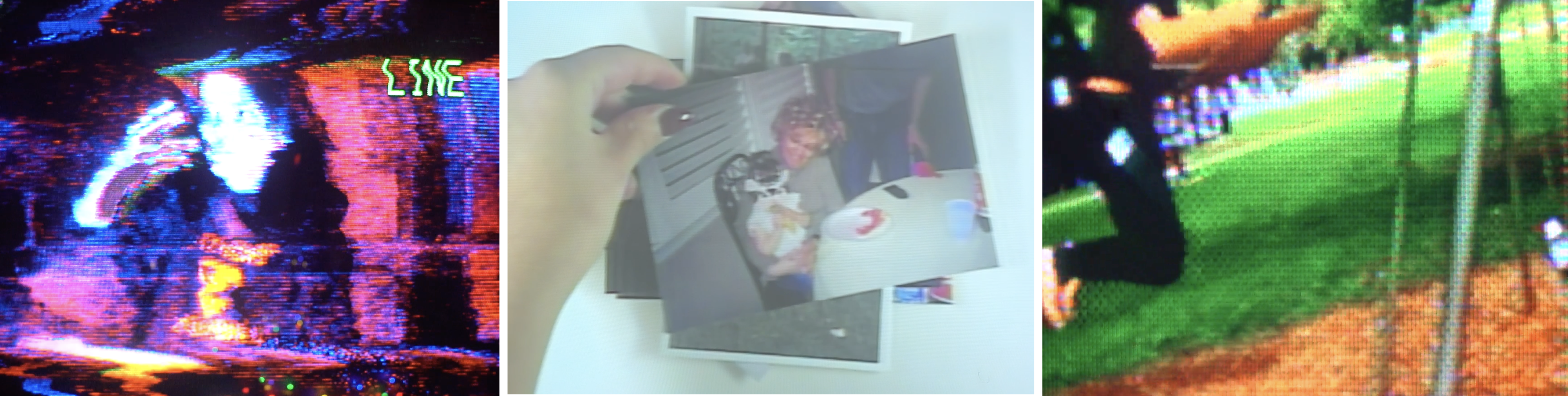
Overview
In this project, you will create a 2–3 minute autobiographical documentary that explores a personal story, memory, or theme connected to one or more layers of your identity.
The project is grounded in auto-ethnographic research and the use of personal archival materials, which must be re-mediated through analogue media technologies provided in class.
This project unfolds across three structured class-work sessions, each requiring a submission so the instructor can provide feedback and track your creative process.
Analogue Media Technologies (Provided in Class)
You will work with some of the following tools:
- CRT TVs
- Overhead projector
- Cassette recorders
- Scanners
- Light Table
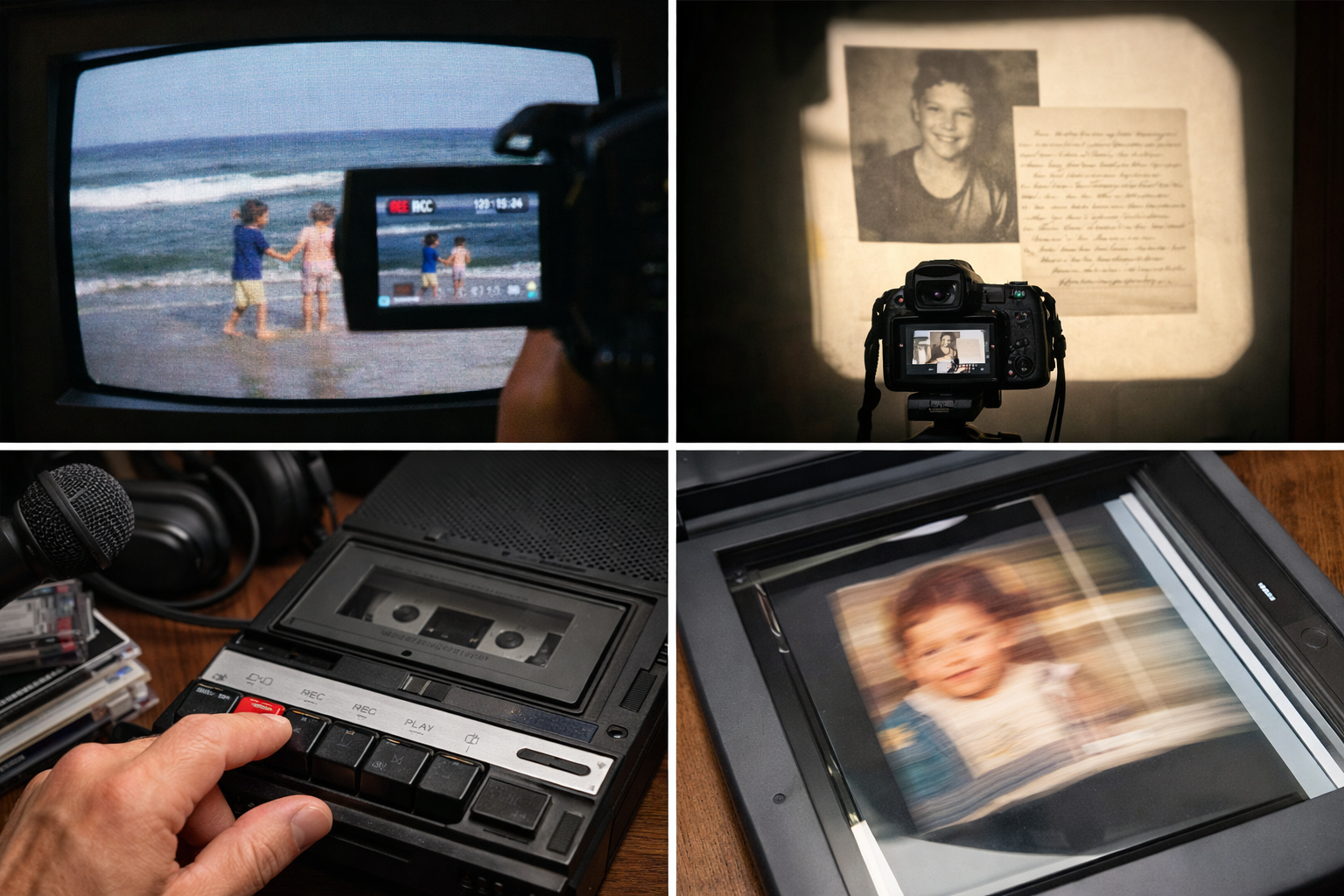
Examples of valid re-mediation include:
- Recording images or videos playing on a screen (CRT TV or Projection)
- Filming interactions with photos, letters, or objects
- Recording narration or ambient sounds onto cassette, then re-recording
- Scanning photos or objects while moving them to create distortions
If you would like to test a different approach, discuss it with the instructor before recording.
Conceptual Framework
As discussed in class and in Rosas & Dittus (2019), autobiographical documentary involves re-contextualizing personal archives through selection, montage, and mediation.
Rather than presenting everything, you are asked to curate, transform, and frame your materials for an imagined audience.
Guiding questions:
- What do I want the audience to understand about me?
- How does analogue mediation change the meaning of my archive?
- What happens when memory passes through obsolete or imperfect technologies?
Recording Equipment Requirements
While Class Work I uses smartphones for exploratory testing and documentation, the final documentary must be recorded using professional audio-visual equipment.
- Video: Professional cameras provided by the department (or approved equivalents)
- Audio: Professional audio equipment provided in class
Audio recorded with Cassette recorders must be re-recorded using professional audio equipment too.
Smartphone recordings are:
- ✔️ Appropriate for Class Work I experimentation
- ❌ Not acceptable as primary footage for the final documentary
Professional recording workflows will be introduced and supported during:
- Class Work II — Recording Session
- Class Work III — Assembly & Editing
This progression is intentional: you will move from exploration → commitment → refinement across the three class-work sessions.
Creative Production & Event Support (Required)
The exhibition is a collective production, and all students are expected to contribute beyond their individual project.
Production Roles
Each student will:
- Be assigned (or volunteer for) a specific production role
- Work collaboratively with peers and the instructor
- Complete their responsibilities reliably and on time
Roles may include:
- Design & Visual Materials (posters, signage, digital assets)
- Communications / Text Editing
- Technical Preparation
- Transportation
- Setup & Cleanup
- Event Support
One student will be invited by the instructor to act as the student coordinator, helping manage communication and workflow.
A sign-up spreadsheet for roles will be available on Avenue to Learn early in the term.
This component emphasizes:
- professionalism
- collaboration
- care for shared resources
- respect for collective labor