MediaArtTutorials
W12 — Final Cut Framework
Final Package & Portfolio Preparation
This document supports the W12 - Final Cut by extending the work beyond picture lock, sound mix, and colour refinement into the professional presentation of the finished short film.
This framework focuses on preparing a clear, well-designed final submission package while also introducing the basics of artist portfolios and film/art CVs. This document helps students organize, write, and present their project for academic, artistic, and early professional contexts.
Sections
Final Package
Your final package is more than a required submission for this course. It is a way of presenting your short film clearly and professionally.
The materials you prepare (stills, film information, logline, synopsis, and credits) are commonly used in festival submissions, screening programs, portfolios, websites, and application packages.
A strong final package helps others quickly understand your work, your role in it, and how to present it accurately.
Representative Stills
Still frames are one of the main ways a film is introduced before anyone watches it. A strong still can quickly communicate the tone, visual quality, and overall identity of your project.
For your PDF information sheet, including one representative still helps make the document more engaging and gives the viewer an immediate sense of your film’s visual language.
Choose frames that:
- clearly show the main subject or action
- represent the visual style of your project
- have good composition and lighting
- reflect key moments in your sequence (beginning, middle, or end)
- Export in PNG (higher quality)
Avoid:
- blurry frames
- transitional frames (mid-motion unless intentional)
- frames that are too dark or overexposed
Film Information
Basic film information identifies the work clearly and allows others to reference it correctly.
Include the following:
- Title
- Director
- Year of Completion
- Runtime (example:
1 minor00:01:00)
Example:
Title: 2 AM COFFEE
Director: Ayush Karki
Country: United States Year of Completion: 2023
Runtime: 00:01:49
Logline
A logline gives a very short introduction to your film. It should communicate the central action, situation, or tension in one or two sentences.
➡️ Review the W7 — Pre-Production Framework: Logline.
Example (2 AM COFFEE):
A man bikes to a quiet gas station at 2 a.m. for a coffee, only to return and find his unlocked bike gone.
Short Synopsis — Structure
A synopsis gives a slightly fuller description of the film than a logline. It should help someone understand the shape of the film without over-explaining it.
Simple structure to write your synopsis:
Character + Situation → Development → Outcome (without revealing everything)
- Introduce the main character and context
- Describe the key action or progression
- Indicate the shift or outcome (keep it concise)
- ⚠️ Do not fully explain the ending —keep some ambiguity.
- Keep your synopsis focused on what the viewer experiences, not on every detail of the plot.
Example (2 AM COFFEE):
During a quiet 2 a.m. coffee run, a man stops at a nearly empty gas station and leaves his bike outside. What begins as an ordinary late-night routine changes when he steps back into the dark and realizes the bike is no longer there. In that sudden disruption, the film transforms a familiar everyday action into a brief moment of vulnerability, tension, and disorientation.
Credits
Credits identify who made the film and recognize the work of everyone involved. This is important both professionally and ethically. Proper credits acknowledge collaboration, make production roles visible, and help you avoid presenting shared work as if it were completed entirely by one person.
Template
Director / Editor: Your Name with Lastname
Camera / Cinematography: Collaborator Name (only if other)
Performer: Performer Name (only if other)
Sound Design (Music, Sound Effects, Foley, Ambient Sound): Name, Author, & Website, or Author (if recorded specifically for the project)
Additional Collaborators: Name (production assistance), Name (location support)…
Locations / Location Support: Location Name, City
Tips:
- Only include roles that are actually relevant to your project
- Use people’s names accurately and consistently
- If you worked alone, you may list multiple roles under your own name
- If you used music, sound, or visual materials created by others, make sure they are properly credited
Example:
Director / Editor / Camera: Maria Lopez
Performer: Tamara Smith
Music: Morning Drift — Blue Dot Sessions [downloaded from FreeSound]
Sound Effects: Door Creak — Freesound usersoundmonger[downloaded from FreeSound]
Foley: Recorded by Maria Lopez
Additional Collaborators: Samantha Guizar (production assistance)
Locations / Location Support: Factory Media Centre, Hamilton
Example (2 AM COFFEE):
Writer/Director Ayush Karki
Cinematography Robidh Basnet
Performer: Abdulhaq Alrudaini
Design
Design matters. Use the layout, alignment, hierarchy, and composition principles you practiced in Design Fundamentals to build a document that is clear, intentional, and visually coherent.
Take the time to properly format your document:
- choose a consistent font style and size
- create a clear hierarchy of information with headings and subheadings
- align text, images, and spacing carefully
- position your still image thoughtfully within the page
- avoid making the image too large, where it overwhelms the text, or too small, where it loses impact
- keep your still image at a readable size — around 1/3 of a page is recommended
- use margins and white space to avoid a crowded layout
- keep the layout clean, readable, and visually balanced
- avoid too many fonts, colours, or decorative elements
- make sure all information is easy to scan quickly
Think about:
- alignment — are elements lined up clearly?
- contrast — is the text easy to read?
- proximity — are related items grouped together?
- balance — does the page feel visually stable?
- emphasis — what do you want the viewer to notice first?
⚠️ This document represents your project professionally.
Dossier Basics
A dossier is a larger support document that brings together multiple professional and creative materials in one file.
In some cases, an application will specifically ask for a dossier. In other cases, it may not use that word, but it may still ask you to submit a combination of the following materials as separate files or grouped together in one PDF. It is important to read submission requirements carefully and prepare your files in advance.
- CV or Resume
- Portfolio Materials
- Portfolio
- Demo Reel
- Work Sample Document (Works List)
- Written Professional Materials
- Artist Bio
- Artist Statement
- Cover Letter or Letter of Intent
CV or Resume
A document that outlines your education, professional experience, exhibitions, screenings, skills, awards, publications, and other relevant experience.
Recommended sections include:
- Education
- Professional Work
Prioritize creative and artistic work first when relevant. - Art Service
Volunteer work, organizing, coordination, or support roles in art-related spaces. - Professional and Artistic Associations
Collectives, organizations, networks, unions, or memberships connected to your practice. - Awards and Funding
- Performances / Exhibitions / Screenings / Selections
Include the year, title of the work, event or venue name, city, country, and your role when relevant (for example: artist, filmmaker, performer, collaborator, editor, sound designer).
Depending on the job, call, or submission, you should re-arrange your CV to highlight the experience most relevant to that specific application.
- For art applications, emphasize public presentations, exhibitions, screenings, performances, and artistic production.
- For film applications, emphasize public presentations, screenings, selections, and film-related production work.
- For post-graduate applications, emphasize education, artistic research, writing, and creative practice.
- For creative industries applications, emphasize education, relevant creative work, technical skills, collaborative projects, professional experience, and art service when applicable.
Your CV should not be treated as a fixed document. It should be adjusted depending on the context, making the most relevant experience easier to find quickly.
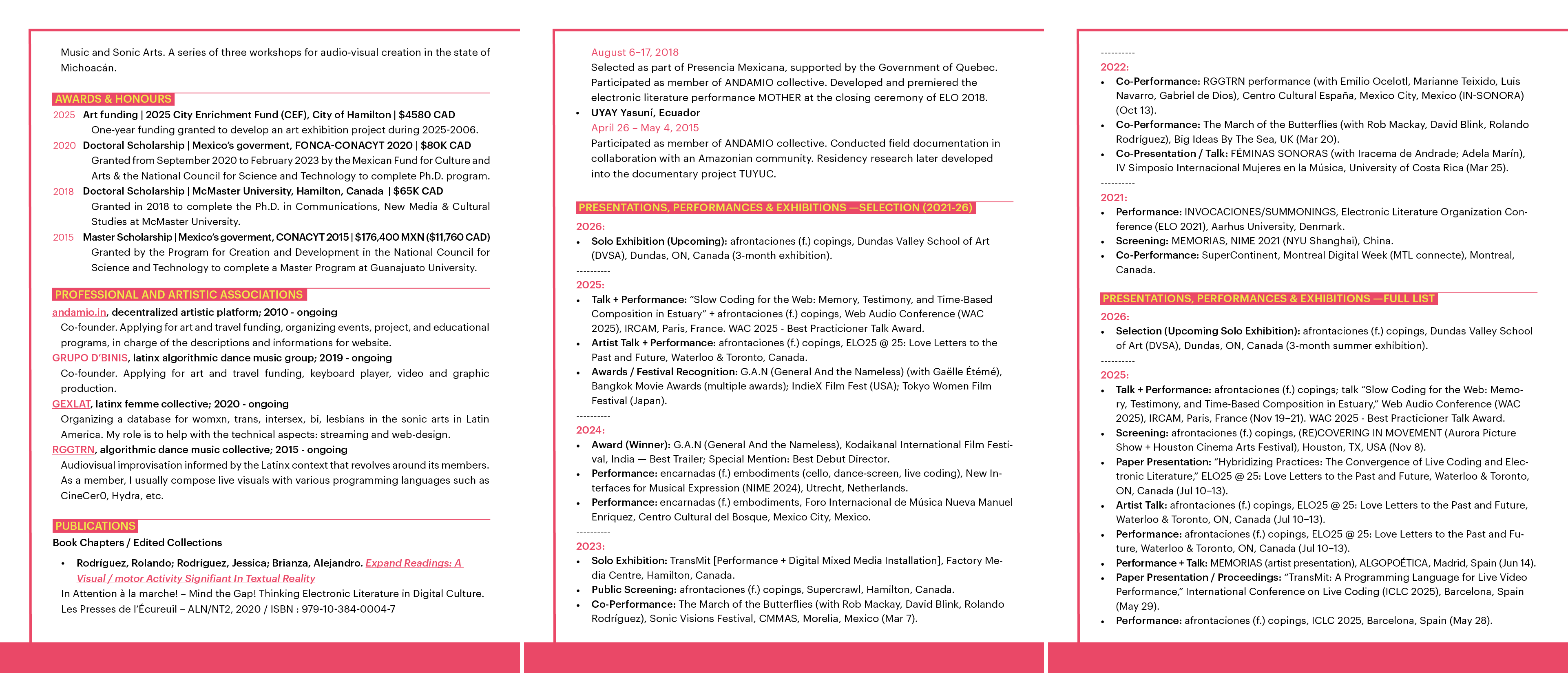
Recommendations
For technical skills, include the software, tools, and production skills you can use confidently.
For this course, you can already list software such as Adobe Premiere Pro, since you have used it across several projects and at multiple stages of the production process, including editing, sequencing, sound integration, colour correction, and final export.
You may also include other relevant production skills, such as:
- DSLR camera operation with manual camera settings
- basic lighting setup
- video editing
Make a general CV/Resume document and add every new activity as soon as it happens so you do not forget it later. You can include both in-person and online exhibitions or screenings.
As part of this course, you can already add presentations such as:
- February 12, 2026, “Title of the Work”, screening presented at Come As You Art, public exhibition, Lyons Family Studio, McMaster University, Hamilton, Ontario, Canada. Artist.
- 2026, “Title of the Work” at Come As You Art: Photo Film, online exhibition. Artist.Public access: https://media-studio-art.github.io/come-as-you-art/
- April 7, 2026, “Title of the Work”, screening presented at In One Minute, public screening, Concert Hall, McMaster University, Hamilton, Ontario, Canada.
Keep a full CV document with all your experience. In a separate file, prepare a one-page or two-page version that you can adapt for specific jobs, submissions, grants, screenings, or graduate school applications.
Remember that design matters. Your CV should be clear, readable, and well organized.
🤖 AI Tip
You can use AI to help revise and adapt your document.
For larger companies, and sometimes medium-sized companies as well, applications may first be reviewed through automated systems before a person reads them. These systems may scan CVs and resumes for keywords, skills, software, job titles, and types of experience that match the posting. This means that the language you use in your document matters.
One useful strategy is to paste the job posting, call for submissions, or application description into an AI tool and ask it to identify the main skills, priorities, and repeated terms. Then, revise your CV to make the most relevant experience more visible and easier to find.
This does not mean you should copy the posting word for word or exaggerate your experience. It means you should make sure your document clearly names the tools, skills, and types of work you actually have, using language that matches the application when appropriate.
You don’t need to upload your CV into an AI tool to do this. You can begin by asking questions like:
- What are the main skills, experiences, and priorities emphasized in this application?
- Which parts of a creative CV should be foregrounded for this opportunity?
- What keywords or types of experience appear most important in this posting and for this centre, company, conference, or department?
- Are there software names, technical skills, or types of experience I should name more clearly in my CV?
- What kinds of experience seem most valued here: creative production, collaboration, research, public presentation, technical skills, or administration?
Use AI as a tool to help you read the application more strategically, not to invent experience or write a misleading CV for you.
Portfolio Materials
Portfolio
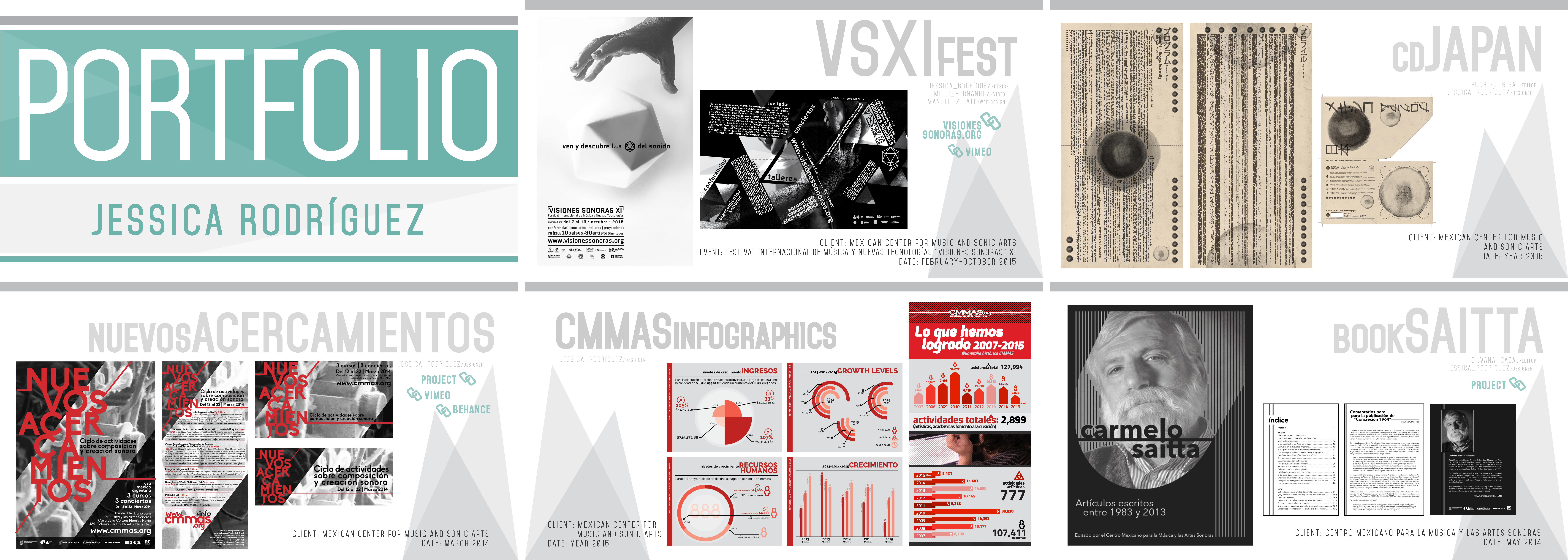
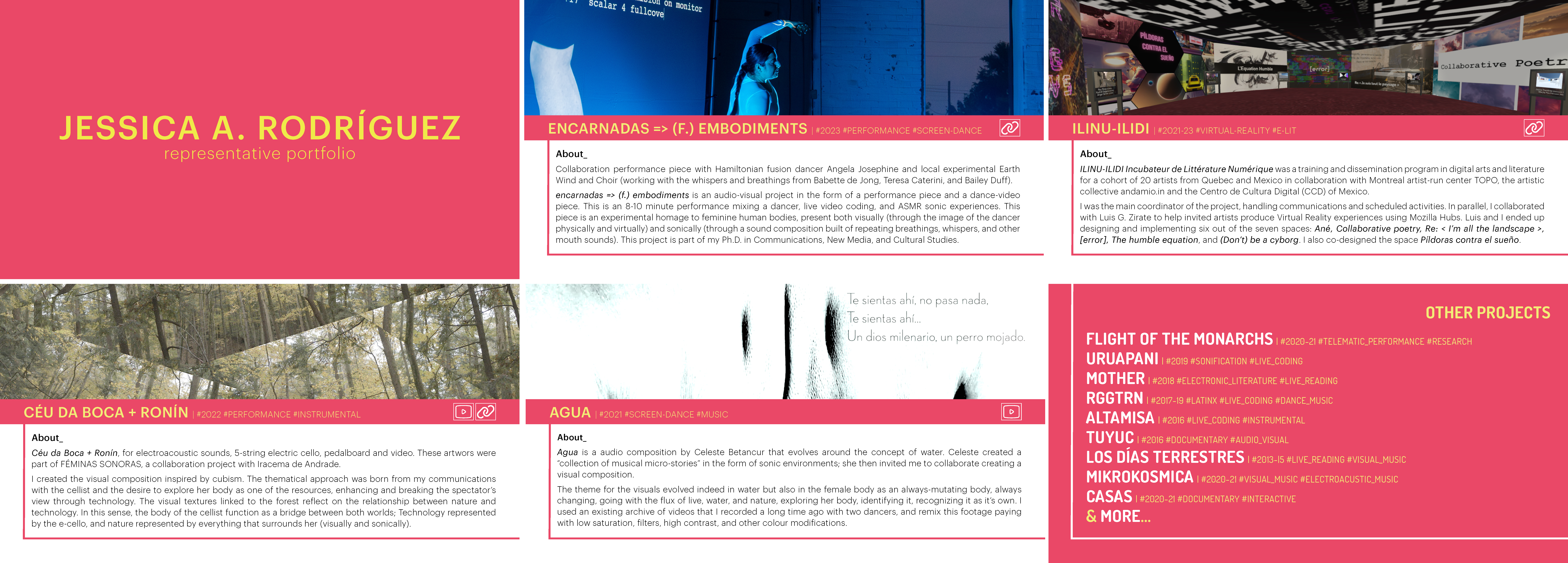
A portfolio is a selection of your creative work presented in a clear, organized, and visually coherent format. You may prepare your portfolio as a web portfolio and/or as a PDF portfolio ready to send. It is a good idea to have both.
Depending on the application, you may be asked to submit only a small selection of work. In that case, select 4–5 representative projects that are most relevant to the opportunity.
Whichever format you use, keep the presentation of information consistent across projects. Use the same structure, same order of information, and a similar visual logic throughout the portfolio.
Remember that design matters. Your portfolio should be engaging to look at, easy to navigate, and strong enough to represent your work professionally. The layout, image choices, and structure should help communicate the quality and character of each project.
For each project, include:
- Title
- Year
- Author and other relevant credits
- Links, when applicable
This may include published videos, websites, interviews, online exhibitions, or other public materials related to the project. - Short description
- Representative images
These may include finished work, installation views, film stills, interface views, and, when relevant, behind-the-scenes images or process documentation.
Short description:
A good standard length is 150–250 words, since this is common in applications for programs, festivals, residencies, grants, and exhibitions. A useful formula for writing the description is:
- Project title / format + central idea or concern + materials, methods, or process + presentation context or outcome.
- Focus on the project’s concept, form, process, and context without becoming too vague or overly promotional.
For web portfolios, you can extend this description up to 500 words, while still making sure the main information is clear within the first 150–250 words.
Demo Reel
A demo reel is a short video that presents selected excerpts of your work. These are especially common in film, video, animation, motion graphics, editing, cinematography, sound, and media arts applications.
Demo reels should usually be 1–2 minutes long.
Tips:
-
Open with strong work immediately
Do not wait until the middle or end to show your best material. -
Keep clips short and purposeful
Each clip should demonstrate something clearly and move quickly. -
Make your role clear
If the work was collaborative, indicate what you did: director, editor, cinematographer, animator, sound designer, performer, etc. -
Use clean titles or captions when needed
Include your name and, if useful, brief labels for projects or roles. -
Pay attention to sound
Audio levels should be clean and balanced. Do not let the music overpower the clips. If you use music, make sure it supports the reel rather than distracting from it. -
Keep transitions simple
Avoid unnecessary visual effects, decorative titles, or flashy transitions unless they are directly relevant to the kind of work you are applying for. -
End clearly
Include your name and contact information, portfolio link, or website at the end if appropriate.
Like a portfolio or CV, a demo reel should not be treated as a fixed file. You should revise it depending on the application and the kind of work you want to highlight.
Work Sample Document (Works list)
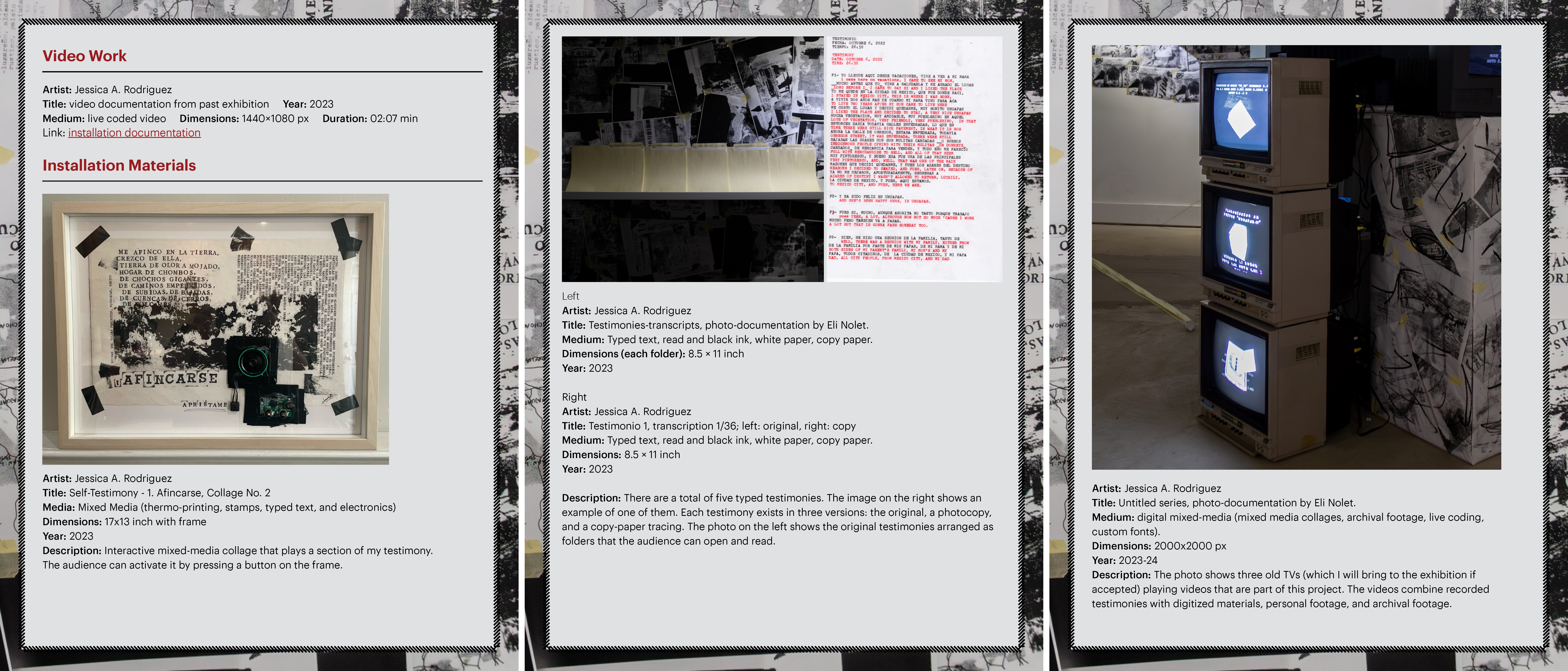
A work sample document is a file that presents individual artworks or projects in a clear, consistent, and easy-to-review format. These are often requested for exhibitions, grants, and other arts applications.
A good approach is to present one work per page, keeping the format consistent throughout the document.
For each work, include:
- Representative image
This may be a still frame, installation view, documentation photo, interface capture, or another image that best represents the work - Title
- Year
- Author and other relevant credits
- Medium
- Dimensions
For example: height × width × depth, using cm or inches consistently - Duration / Runtime
For time-based media, include the full running time - Format
For example: single-channel video, multi-channel installation, live performance, interactive website, digital print, projection-based installation - Short description
- Link, if applicable
For example: Vimeo link, website, online exhibition, project page, or documentation page
Depending on the application, you may also need to include:
- Exhibition, screening, or presentation history
- Technical requirements Important information needed to present or install the work.
- Access information
Such as password-protected links or instructions for experiencing the work
Written Professional Materials
Artist Bio
A short professional introduction that explains who you are, what kind of work you make, and your background. Artist bios are often written in the third person, especially for exhibitions, festivals, conferences, websites, and printed programs.
An artist bio responds to:
- Who are you?
- Where are you based or working from?
- What kind of work do you make?
- What themes, questions, or methods shape your practice?
- What background or training is relevant?
- What key presentations, exhibitions, screenings, awards, or grants help position your work?
It is important to include your country, since this helps situate your practice professionally, geographically, and culturally. In some cases, you may want to include two countries if that reflects your background, identity, or artistic context more accurately, for example:
- Mexican artist based in Canada
- Artist working between Mexico and Canada
- Mexican-Canadian media artist
- Artist from Mexico currently based in Canada
Make sure the tone stays professional, specific, and clear. Avoid vague phrases such as “passionate artist” or “deeply interested in creativity.” Focus instead on the actual forms, methods, themes, and contexts of your work.
Versions
It is a good idea to prepare three standard versions of your bio:
- a 100-word version
- a 250-word version
- a 500-word version
This helps you respond quickly to different application requirements without rewriting the text from scratch every time.
Recommendation: Write the 100-word version first, then expand it into the 250-word version, and finally into the 500-word version. This helps you keep the information consistent across all three.
100-Word Bio
Use this version for short programs, screening notes, event pages, festival booklets, or websites with limited space.
Include:
- Name
- Current role or identity as an artist / filmmaker / designer / researcher
- Country or country + current base
- Main media, format, or area of practice
- Main themes, concerns, or approaches
- One brief background point
This could be your program, institution, location, or a relevant area of experience.
Jessica A. Rodríguez (Mexico–Canada) is a media artist, designer, and researcher working across audiovisual practices and experimental storytelling. Based in Hamilton, Canada, her work explores the intersections of technology, language, and the body through installation and performance, combining video, sound, printmaking, and creative coding. Her practice engages themes of embodiment, migration, and memory from feminist and Latinx perspectives.
She holds a Ph.D. in Communication, New Media, and Cultural Studies from McMaster University, where she currently works as a sessional instructor. Rodríguez is the co-founder of the artistic collective andamio.in.
250-Word Bio
Use this version for applications, exhibition texts, conference programs, portfolios, or professional websites.
Include:
- Everything from the 100-word version
- A fuller explanation of your creative practice
- Your training, education, or professional background
- A few representative presentations, screenings, exhibitions, collaborations, awards, or grants
Jessica A. Rodríguez (Mexico–Canada) is a media artist, designer, and researcher based in Hamilton, Canada, working across audiovisual practices and experimental storytelling. Her work explores the intersections of technology, language, and the body through installation and performance, combining video, sound, printmaking, and creative coding. Engaging themes of embodiment, migration, and memory, her practice is informed by feminist and Latinx perspectives.
Her work is grounded in research-creation, developing projects that treat computational systems and code as expressive and culturally situated forms. Through interdisciplinary collaboration, she creates projects that move between visual music, live audiovisual performance, and installation-based environments.
Rodríguez holds a Ph.D. in Communication, New Media, and Cultural Studies from McMaster University, where she currently works as a sessional instructor teaching media arts, design, and digital storytelling through practice-based approaches.
She is the co-founder of andamio.in, an artistic collective and platform for collaborative experimentation across text, image, and sound. She is also a member of RGGTRN and GRUPO D’BINIS, collectives that explore algorithmic Latinx music and live audiovisual performance.
500-Word Bio
Use this version for major applications, residencies, grant files, long-form websites, professional dossiers, or institutional contexts that ask for a more developed biography.
Include:
- Everything from the 250-word version
- More detail about your creative practice, research, methods, or community context
- A stronger sense of your professional trajectory
- A short list of representative presentations, exhibitions, screenings, residencies, awards, or grants
This longer version should still read like a bio, not a full CV. The final section can briefly mention selected achievements without becoming a long inventory.
Jessica A. Rodríguez (Mexico–Canada) is a media artist, designer, and researcher based in Hamilton, Canada. Her work focuses on audiovisual practices and experimental storytelling, exploring the intersections of technology, language, and the body through installation and performance. Combining video, sound, printmaking, and creative coding, she develops interdisciplinary projects that engage themes of embodiment, migration, and memory from feminist and Latinx perspectives.
Her practice is grounded in research-creation, where computational systems and code are approached as poetic and culturally situated forms. Through performance and installation, she creates works that blend natural and machine languages, producing audiovisual compositions that move between visual music, live coding, and expanded media environments. Collaboration plays a central role in her work, and she frequently develops projects with artists across disciplines, including composers, writers, and designers.
Rodríguez holds a Ph.D. in Communication, New Media, and Cultural Studies from McMaster University, where her doctoral research focused on developing a computer language for live-coded video. She also holds a Master’s degree in Fine Arts and a BA in Visual Arts from Mexico. She currently works as a sessional instructor at McMaster University, teaching courses in media arts, design, and digital storytelling, with an emphasis on practice-based learning, collaboration, and accessible approaches to technology.
She is the co-founder of andamio.in, an artistic collective and platform that supports collaborative experimentation across text, image, and sound. She is also a member of RGGTRN and GRUPO D’BINIS, collectives that explore algorithmic Latinx music and live audiovisual performance through coding and improvisation.
Her work has been presented in performance, festival, and academic contexts, including events such as the International Conference on Live Coding (ICLC), the Electroacoustic Music Studies Network (EMS), and media arts festivals and collaborative performances in Canada, Europe, and Latin America. Selected presentations include live audiovisual performances and research-creation talks that explore live coding as a form of storytelling and audiovisual composition.
Across her artistic and pedagogical work, Rodríguez develops projects that connect creative experimentation with critical approaches to media, emphasizing the role of technology in shaping cultural narratives and lived experience.
Artist Statement
A short text that explains your creative practice, themes, methods, and concerns. It focuses on what your work does, how you work, and why that work matters.
Artist statements are usually written in the first person. Unlike a bio, which introduces you professionally, the artist statement speaks from your own voice and reflects how you understand your practice.
In artist statements, writing matters. The text should be clear, intentional, and well written. Depending on the application, the tone may be more direct and professional, or more reflective and poetic. The statement should sound like you, but it should also help someone unfamiliar with your practice understand what you do.
Some applications may ask for a video artist statement instead of, or in addition to, a written one.
Versions
It is a good idea to prepare two standard versions of your statement:
- a 150-word version
- a 300-word version
Recommendation: Write the 150-word version first, then expand it into the 300-word version. This helps you keep the information consistent across both versions.
Your artist statement should help the reader understand:
- What kind of work you make
- What questions, themes, or concerns shape your practice
- What materials, media, or methods you work with
- How you approach making
- Why this work matters to you and/or to the context in which it is presented
150-Word Version
Use this version for shorter applications, project pages, screening notes, exhibition support material, or forms with limited space.
Include:
- A brief description of your practice
- Your main themes, concerns, or questions
- Your main media, materials, or methods
- A short explanation of what motivates or grounds the work
300-Word Version
Use this version for portfolios, grant applications, residency applications, exhibition proposals, and other contexts where you have more space.
Include:
- Everything from the 150-word version
- A fuller explanation of your process or methodology
- More context for your themes, influences, or artistic concerns
- A clearer sense of why the work matters in relation to audience, place, memory, politics, identity, technology, community, or another relevant context
Cover Letter or Letter of Intent
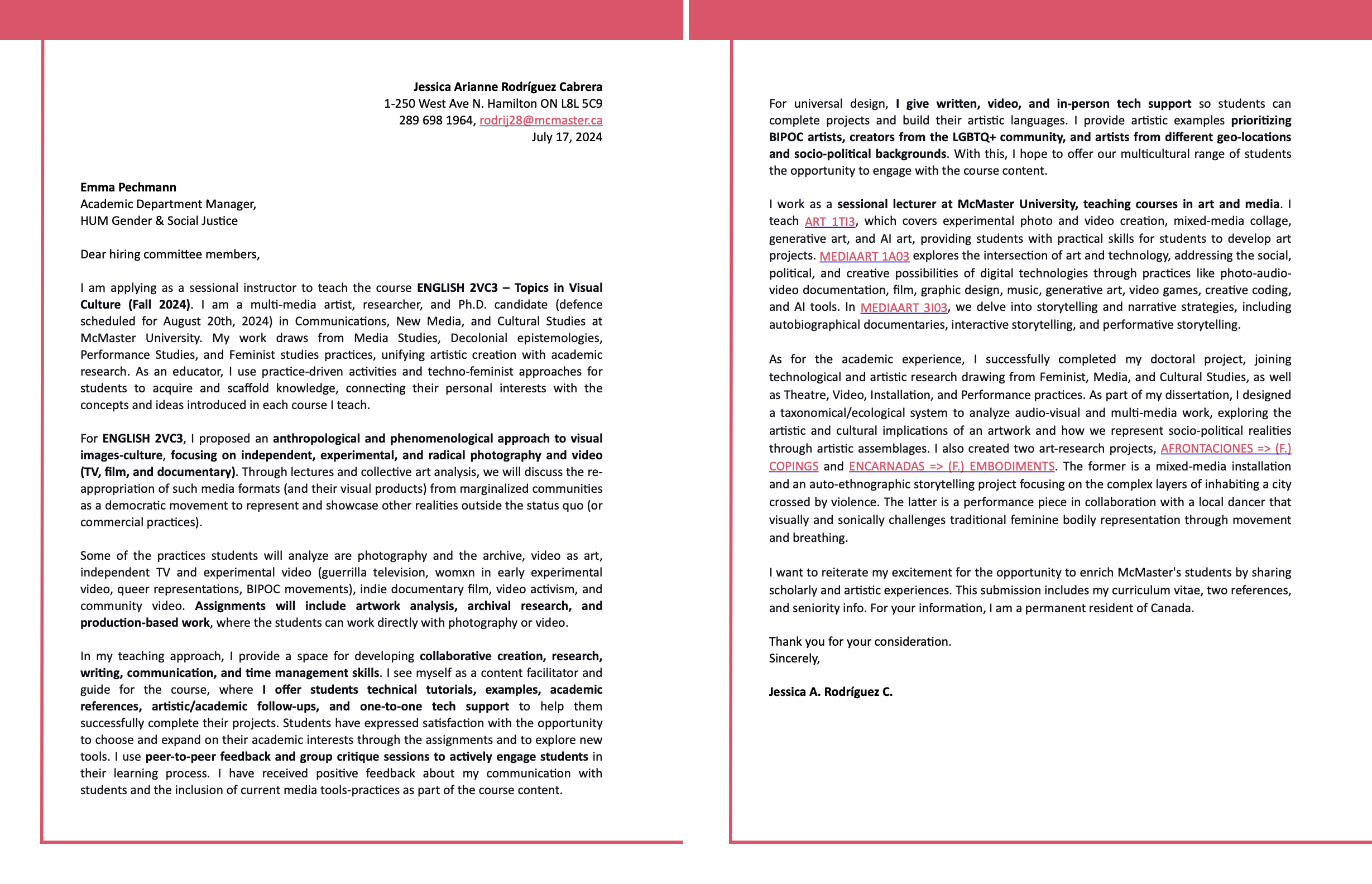
A cover letter or letter of intent is a brief document tailored to a specific opportunity.
Cover letters are usually one page. In some cases, especially for post-graduate applications in creative fields, they may be one to two pages, depending on the instructions and the amount of detail requested.
Like a CV, this document should never be treated as fixed. It should be revised for each application. Avoid writing one generic letter and sending it everywhere. The reader should be able to tell that the letter was written for that specific opportunity.
A strong cover letter or letter of intent should:
- clearly state what you are applying for
- explain why you are interested
- highlight the most relevant parts of your background
- show that you understand the context of the position, program, or opportunity
- make a clear case for why your experience, work, or goals fit
.
Expectations by Context
🏭 Job applications in the creative industries
These letters should be direct and specific. The main goal is to show:
- why you want this specific role
- how your experience connects to the responsibilities of the job
- what technical, creative, collaborative, or organizational skills you bring
- why you are a good fit for the company, studio, centre, or institution
A useful formula is:
Position + interest in the organization + relevant experience + relevant skills + closing fit
🏫 Post-graduate school in creative fields
These letters should explain not only your background, but also your creative interests, research direction, and reasons for applying to that specific program. The main goal is to show:
- why you want to pursue graduate study
- what questions, themes, or areas of practice shape your work
- how your past education and creative experience have prepared you
- why this specific program, department, faculty, or institution is a good fit
- what you hope to develop through the degree
A useful formula is:
Program + creative/research interests + relevant background + why this program + future goals
🏫 Exhibitions, residencies, grants, festivals, and other arts applications
These letters often functions more like a statement of intent. The main goal is to show:
- why you are applying to this opportunity
- why your work fits the theme, context, or goals of the call
- what project, practice, or body of work you are presenting
- why this opportunity matters for your development or for the project itself
A useful formula is:
Opportunity + project/practice + why the fit makes sense + relevant background + closing intention
🤖 AI Tip
Like CVs and resumes, cover letters may also be reviewed by automated systems before a person reads them, especially in larger organizations and some medium-sized ones. This means that the language you use matters.
Use AI without uploading your letter
Paste the job posting, call for applications, or program description into an AI tool and ask it to help you identify what matters most:
- What are the main skills, experiences, and priorities emphasized in this application?
- What should a cover letter foreground for this role, program, or opportunity?
- What keywords or themes appear most important in this posting?
- What kinds of experience seem most valued here: technical skills, collaboration, leadership, research, creative practice, community work, or public presentation?
- What should be highlighted in a letter for this specific company, department, gallery, festival, or residency?
This step helps you understand the application more strategically before you start revising your letter.
Paste your draft and ask for targeted revision help
If you want, you can also copy and paste your draft into an AI tool and ask for revision support. The important thing is to tell the AI not to replace your voice or rewrite the whole letter in generic language.
Useful prompts include:
- Improve clarity, flow, and structure without changing my tone or voice.
- Point out repetition, vague phrases, or weak sentences.
- Suggest where I can be more specific.
- Check whether this letter clearly matches the application.
- Identify places where I should name relevant skills, experience, or context more directly.
- Keep my wording as much as possible and only suggest minimal edits.
- Help me make this letter more concise without making it sound generic.
Always proofread the final version yourself.
AI can help you identify priorities, improve structure, or point out unclear sections, but it may also flatten your tone, introduce incorrect details, or make the writing sound generic.
Credits: Jessica A. Rodríguez
AI Disclosure:
AI tools (ChatGPT) were used for editing and clarity only. AI is not used to generate original course content.