🌀 Object Play I: Sketch a Blocky Abstract Sculpture or Creature
Time: 20 minutes
Goal: Use simple geometric shapes to design a blocky, abstract sculpture or creature that communicates a story, mood, or purpose.
Your design should not look realistic. Keep the main shapes visible and easy to recognize so you can rebuild them in Blender using only primitives.
❗ Avoid
- Realistic human or animal anatomy
- Detailed faces
- Fingers, hair, fur, scales, or clothing
- Thin or complicated parts
- Too many small shapes
🧱 What Is a Primitive?
A primitive is a simple geometric form used as a starting point for 3D modelling.
Examples include: Cube, Sphere, Cylinder, Cone, and Plane.
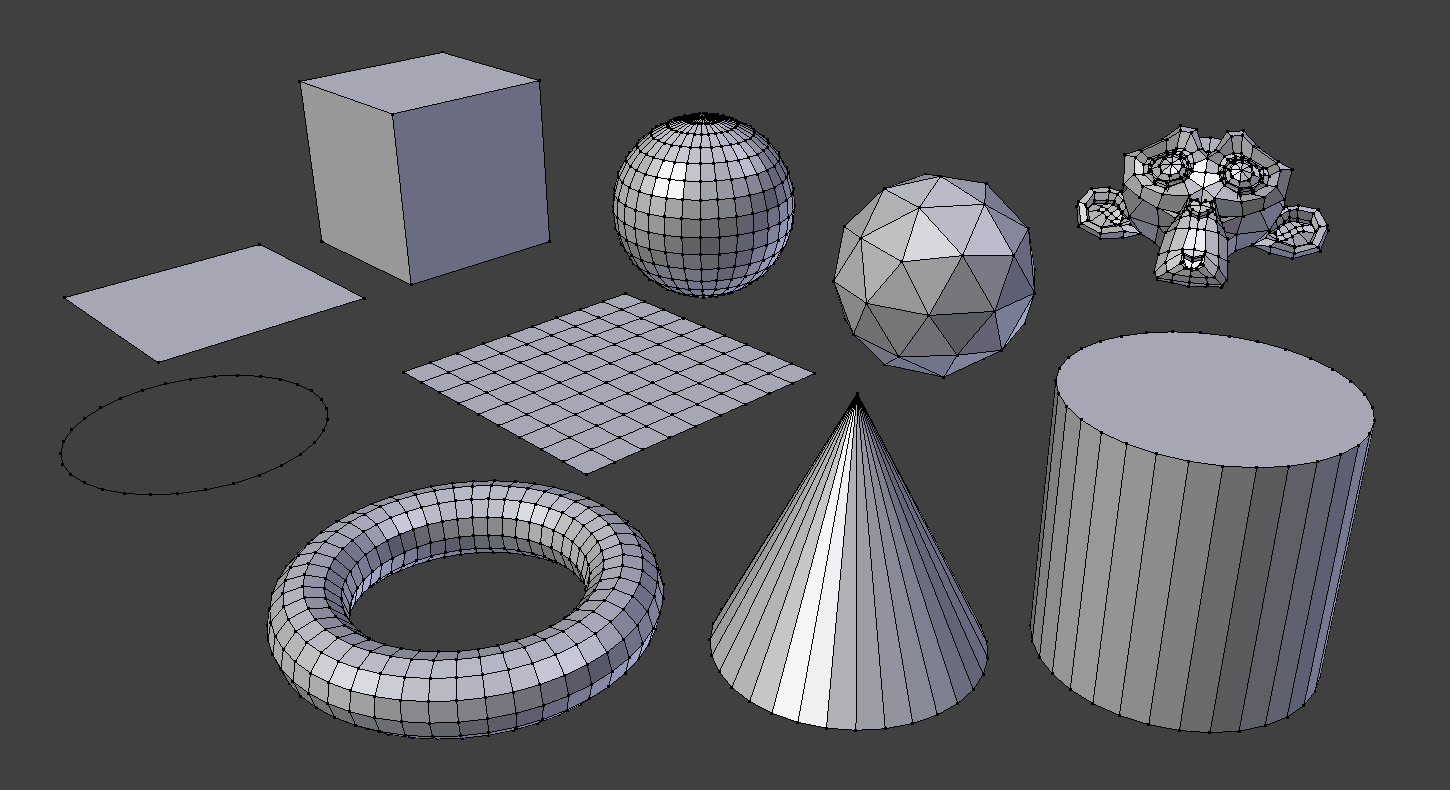
Complex forms can be created by combining, resizing, rotating, repeating, and overlapping these basic shapes.
For this activity, focus mainly on cubes, rectangular forms, cylinders, and other bold geometric shapes. Your design should look solid, simplified, and blocky rather than smooth or realistic.
1. Choose an Idea — 3 minutes
Select one direction for your design:
- A blocky abstract sculpture
- A geometric imaginary creature
- A mysterious object
- A machine or invention
- Something else: __________
Choose one quality you want your design to communicate:
- Playful
- Powerful
- Calm
- Strange
- Fragile
- Dangerous
- Curious
- Other: __________
2. Plan with Blocky Shapes — 4 minutes
Break your idea into a small number of simple geometric parts.
| Part of the design | Shape or primitive |
|---|---|
| Main body or central form | |
| Top, head, or upper section | |
| Sides, arms, or extensions | |
| Base, legs, or support | |
| Repeated or decorative parts |
Try to use no more than five or six main shapes.
3. Sketch Your Design — 10 minutes
Draw your sculpture or creature using only bold geometric shapes.
Your design should be:
- Abstract rather than realistic
- Blocky rather than smooth or detailed built from clearly visible geometric parts
As you sketch, think about:
- Which shape will be the largest?
- Which parts will be cubes, cylinders, cones, or spheres?
- How will the shapes connect, overlap, stack, or repeat?
- Will the design stand, float, lean, or balance?
- Will the design feel heavy, light, stable, or unstable?
- How can the arrangement of shapes communicate a mood or story?
Label the main shapes in your drawing.
For example: Cube, Rectangular block, Cylinder, Cone, Sphere…
Your drawing does not need realistic anatomy, facial details, fingers, fur, clothing, or complex textures. The geometric shapes should remain visible in the final design.
4. Add a Story, Mood, or Purpose — 3 minutes
Complete the sentences:
My design is called:
It communicates the mood of:
Its purpose or story is: